THE WALLS REALLY DID COME TUMBLING DOWN
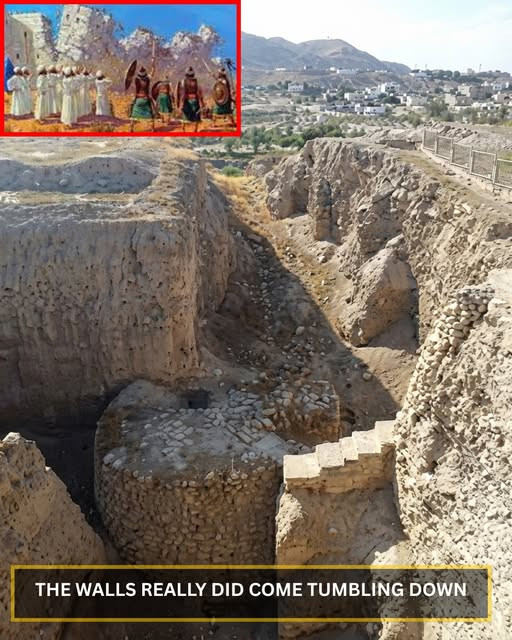
In the spring of 1997, two Italian archaeologists conducted a focused excavation at Tell es-Sultan, ancient Jericho. What they uncovered aligned with earlier findings: clear evidence of a violent destruction by fire dating to around 1400 BC—the period the Bible associates with Joshua’s conquest. This was not a slow decline. It was sudden and catastrophic.
When biblical archaeologist Bryant Wood later examined the site, a key detail stood out. At the base of the tell, excavators exposed the stone revetment wall with mudbrick city walls still attached above it. At the outer base lay heaps of collapsed mudbrick, fallen straight down—not inward, not eroded—creating a natural ramp. This mirrors Joshua 6, which says the walls “fell flat,” allowing the Israelites to go up into the city.

Servant of God, persuer of the truth, Patriot, dog breeder. WWG1WGA (Please don't follow me if you are looking for a romantic hookup)
Equally striking is what did not fall. Scripture records that Rahab’s house, built into the city wall, remained standing. Archaeology shows a section of wall left intact while surrounding portions collapsed. In the narrative, judgment and mercy stand side by side—destruction everywhere, preservation where faith was shown.
Whether approached as history, archaeology, or faith, the remains at Jericho continue to fuel discussion. The physical record shows a city that fell in a moment, its walls collapsing outward—an image that has echoed for millennia.