
Servant of God, persuer of the truth, Patriot, dog breeder. WWG1WGA (Please don't follow me if you are looking for a romantic hookup)
In 1939, archaeologists excavating the ancient city of Alalakh (modern Tell Atshanah near the Turkey–Syria border) uncovered a statue of King Idrimi, dated to around 1550 BCE. What they found carved into the statue stunned historians.
The inscription records Idrimi fleeing south to the land of Canaan, where he lived for seven years among a people called the “Habiru.”
This matters because Habiru (or Hapiru) is linguistically linked to Hebrews, the descendants of Eber, the same ancestral line Scripture assigns to Abraham’s family.
Even more striking:
• This is one of the earliest archaeological mentions of the land called “Canaan” — the exact biblical name used in Genesis.
• The timing aligns with Jacob and his clan living in Canaan, generations before Israel ever went down to Egypt.
• Idrimi describes sacrifices involving lambs and released birds, rituals consistent with Hebrew sacrificial practices described in Genesis and later Torah law.
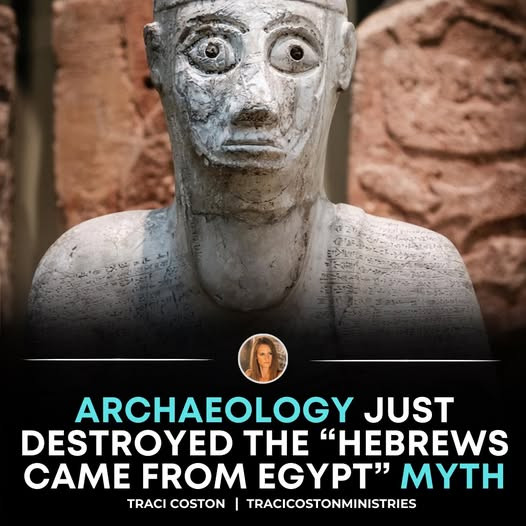
This directly challenges the modern claim that the Hebrews only emerged later as an Egyptian offshoot.
Archaeology says otherwise. The Hebrews were already in Canaan—with their identity, worship, and customs—exactly where the Bible says they were.
Once again, archaeology is catching up to Scripture!