ANOTHER SKULL DISPROVES THE EVOLUTIONARY ORIGIN OF MAN
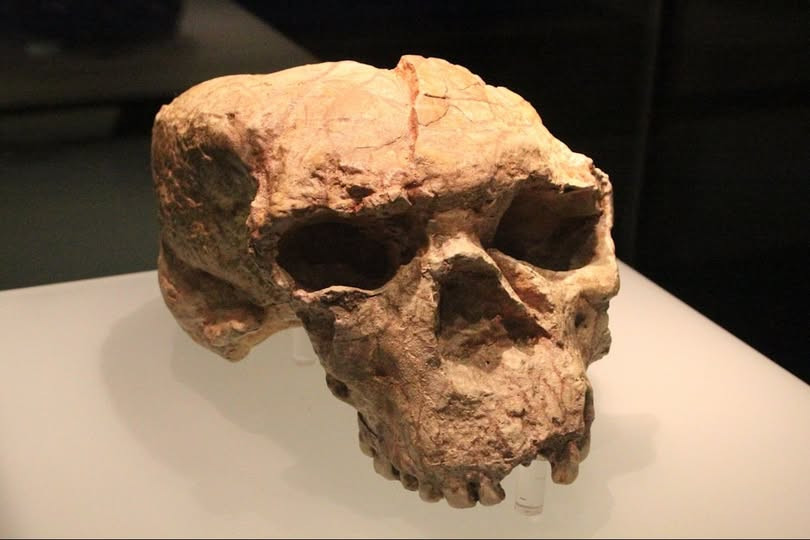
The Yunxian 2 skull, discovered in Hubei, China in 1992, was long classified by evolutionists as Homo erectus, an alleged early human ancestor. But this week, new 3D imaging led researchers to suggest it may belong to a different group, possibly related to the Denisovans or the so called Dragon Man. They now claim this pushes the human evolutionary timeline back more than a million years.
Here is the problem. Denisovans were fully human. They intermarried with other humans, and their DNA is still present in populations today. Calling this fossil “Denisovan like” does not support evolution. It simply reflects normal variation within mankind. No matter how many labels are created, whether erectus, longi, or Denisovan, the fossils still point to people, not creatures evolving into humans.

Servant of God, persuer of the truth, Patriot, dog breeder. WWG1WGA (Please don't follow me if you are looking for a romantic hookup)
For biblical creationists, the constant rewriting of the evolutionary story is expected. Dating methods rely on unprovable assumptions, and partial skulls are always interpreted through the lens of an existing narrative. Rather than supporting millions of years of evolutionary development, the Yunxian 2 skull fits far better with the biblical account of human diversity spreading after the Tower of Babel. While scientists debate categories, Scripture provides clarity. Humans were created in the image of God, with dignity, purpose, and eternal worth.