

Did you know that cowboys and Indians is fake history? The native Americans were White. The White Israelites were in America 1000 years before Christ was even born.

Assist me in your discovery please message DM, or text 801.636.0419
Email: jtwightman@msn.com
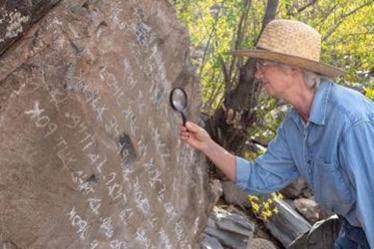
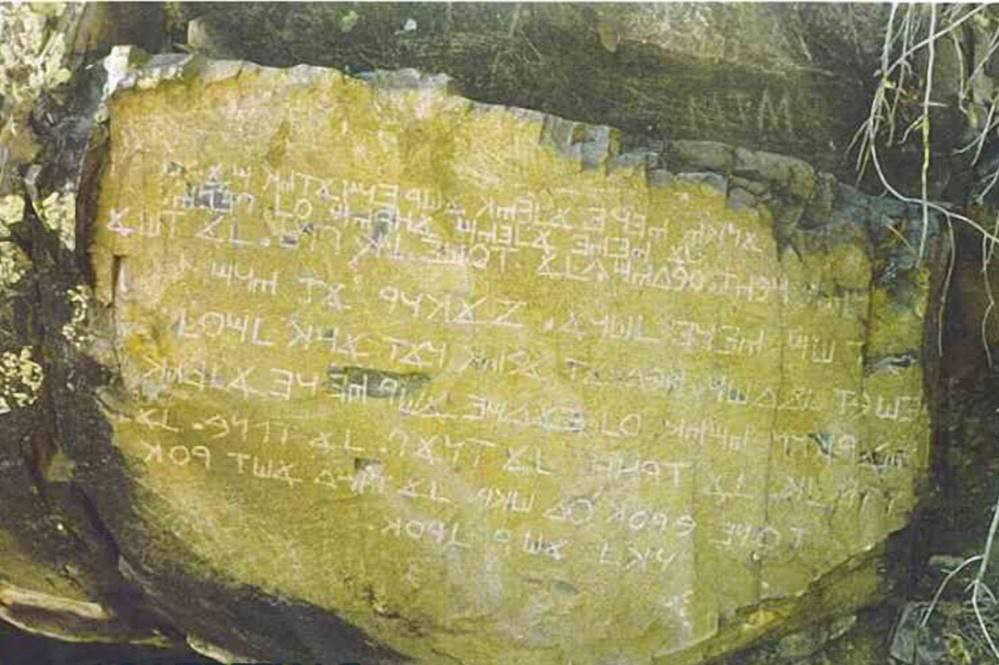
In 1949, Robert Pfeiffer of Harvard’s Semitic Museum arrived in Los Lunas to inspect the stone. He concluded that it was written in a mixture of Moabite, Greek, and ancient Phoenician—an orthography that is basically Paleo-Hebrew, the script of the Israelites prior to their exile to Babylon. There is even a debate in the Scriptures that was originally given to the Israelites was written in Paleo-Hebrew or Assyrian, today’s Hebrew orthography. The alphabet continued to be used by
Samaritans and was known by Irish theologian and scholar Henry Dodwell as early as 1691, who wrote in his A Discourse Concerning Sanchoniathon’s Phoenician History that “[the Samaritans] still preserve [the Pentateuch] in the Old Hebrew character.”
But it was Pfeiffer’s translation of the mysterious inscription on the stone that created the greatest interest among scholars and others: “I am Yahweh, the God who brought thee out of the land of Egypt out of the house of bondage.
Cont...
...Cont
Thou shalt not make unto thee a graven image.” The stone began to be referred to as the “Mystery Stone” or “Commandment Rock,” a title that gained further currency when The Epigraphic Society accepted Pfeiffer’s reading of the inscription as a truncated form of the Ten Commandments that,
according to the Hebrew Bible, were given to Moses at Mount Sinai.
The Stone of Los Lunas
In New Mexico there is a large rock on which are engraved “the 10 Commandments” in an ancient Hebrew language and before the arrival of the European conquerors.
The stone was first documented in 1933, but it could be 2000 years old. Professor Frank Hibben, who examined the stone at that time, found that the inscription was authentic and very ancient.
"History is a collection of lies that have been agreed upon."